
A country might build open banking “the right way.” Regulation, security, standards, and everything else in check. And still struggle with consumer adoption. This was Australia’s open banking story.
In 2020, Australia launched the Consumer Data Right (CDR), one of the most ambitious open banking systems anywhere in the world. For the first time, Australians could share their bank data securely with other companies so that they could in turn offer customers better deals, better loans, better services, and smarter tools to manage their money. It seems as though Australians were not fazed by this, because three years later, by the end of 2023, only 0.31% of Australian bank customers were sharing their data. That is 3 out of every 1,000 people.
Here’s what went wrong
The Australian Banking Association commissioned a review from Accenture, and the findings were uncomfortable but not surprising. The system had been built perfectly, unfortunately without the people in mind. The few people who tried it did not stick around long enough to see its benefits. Part of the problem was how the banks themselves approached it. For most of them, CDR was a compliance exercise. Something the regulator required, not something that could grow their business.
The Accenture review found that compliance costs had far exceeded original estimates, and that constant changes to data standards made it difficult for banks to plan ahead. Innovation suffered because the rules around using CDR data were restrictive, and many fintechs could not build compelling enough products within those constraints. On the consumer side, the experience was not much better. The consent process was complex, in some cases requiring paper forms just to onboard a business customer. Most Australians who heard about CDR at all could not point to a single product that would make the effort of sharing their data worthwhile.
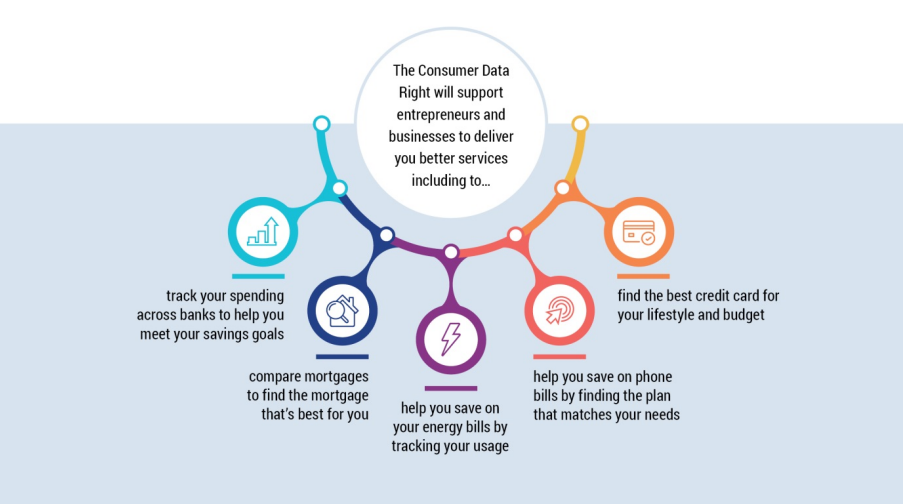
Then in August 2024, Australia’s Assistant Treasurer called the CDR “a good idea, badly executed” and announced a full reset. This is not a hit piece on Australia. What happened next is actually a learning point for Nigeria. The government went back and rebuilt the system, but this time with the everyday Australians in mind. Instead of the CDR trying to be everything for everyone, they narrowed in on use cases that solve the problems Australians actually face: home loan applications, switching energy providers, small business accounting. They passed legislation allowing third parties to not just read your data but act on it, offering services like making payments or switching your account. They simplified the consent process and integrated digital identity to reduce friction. And it worked. By the second half of 2024, just months after the reset, 530,000 Australians were actively using open banking products, a 135% jump from six months earlier. Data requests hit 582 million in that same period. By 2025, Australia had crossed 4 billion consumer data requests in total. FinTech Australia now has a target of 5.4 million users by 2030, roughly one in four eligible Australians. The turnaround did not come from better technology. They already had the best. It came from answering a question they should have started with. Why would the average Australian bother sharing their data?
This brings us to Nigeria
The CBN has proposed a phased open banking roadmap in 2026. The foundation has been built over the past few years, and on paper, we are near ready. But good on paper is exactly where Australia was in 2020. We have written before about what happens when you build systems without thinking about the people they are supposed to serve. If after all the effort, millions still struggle to pay, borrow, or save with any sense of ease, then we have not really achieved what we set out to do.
Three years after implementation, Australia had to retrace their steps and revisit why people should be using open banking at all. That should have been obvious from the start. Who builds a system and then goes looking for reasons people should use it? Nigeria does not have to look. The problems are glaring, loud, and obvious. Nigerians with years of transaction history across multiple accounts cannot access affordable credit from lenders because they do not see the full picture. Salary earners with consistent income still start the verification process from scratch every time they approach a new bank. Small businesses reconcile cash flow manually across three or four accounts at the end of every month. Open banking can fix these structural limitations. But only if the products built on top of it speak to the problems directly. Australia learned this after three years of low adoption. When they finally focused on solving the problems their people actually had, the numbers jumped. We know this now, before we launch. That is our advantage.
Trust will be the key driver
Knowing what to build will not be enough on its own. Australia, a country with high digital literacy and strong consumer protections, could not get people to willingly share their bank data for years. Nigeria, where trust in financial institutions is complicated at best, will need more than working infrastructure to get there. We know this about ourselves. Many Nigerians have lived through data breaches, transaction failures, unexplained deductions, and customer service that leads nowhere. Prompting people to share their bank data means asking them to override years of earned caution. This means the burden of proof falls on the ecosystem, not the consumer. Banks and fintechs building on open banking will need to demonstrate safety before asking for trust. Regulation alone will not create that confidence. So even while building to solve problems, we will still need visible consumer protections. Clear communication about what open banking is and what it is not. And more than anything, we will need early wins, the type where people through lived experience can help drive further adoption.
Australia spent three years learning that you can have one of the best systems in the world and still watch it sit unused. They went back, focused on the people, and the numbers moved. Nigeria has the rare luxury of watching that whole cycle before our own open banking system goes live.
