
By Open Banking Nigeria
Last updated: February 2026
Rwanda’s economic trajectory over the past two decades reads like a case study in what focused policy and disciplined execution can achieve. The economy has maintained strong growth, averaging 9.2% real GDP growth across the first three quarters of 2024, following 8.2% in both 2023 and 2022. By the third quarter of 2025, growth had accelerated even further, reaching 11.8%.
The rate of financial inclusion has surged from 48% in 2008 to over 96% in 2024, making Rwanda one of the most financially inclusive countries in Africa. This means over 4.5 million previously excluded Rwandans now enjoy access to a growing range of financial products and services. But Rwanda is not treating access as the finish line. The country is now engineering a transition from basic financial inclusion to genuine financial empowerment, and open finance is central to that ambition.
The digital finance ecosystem
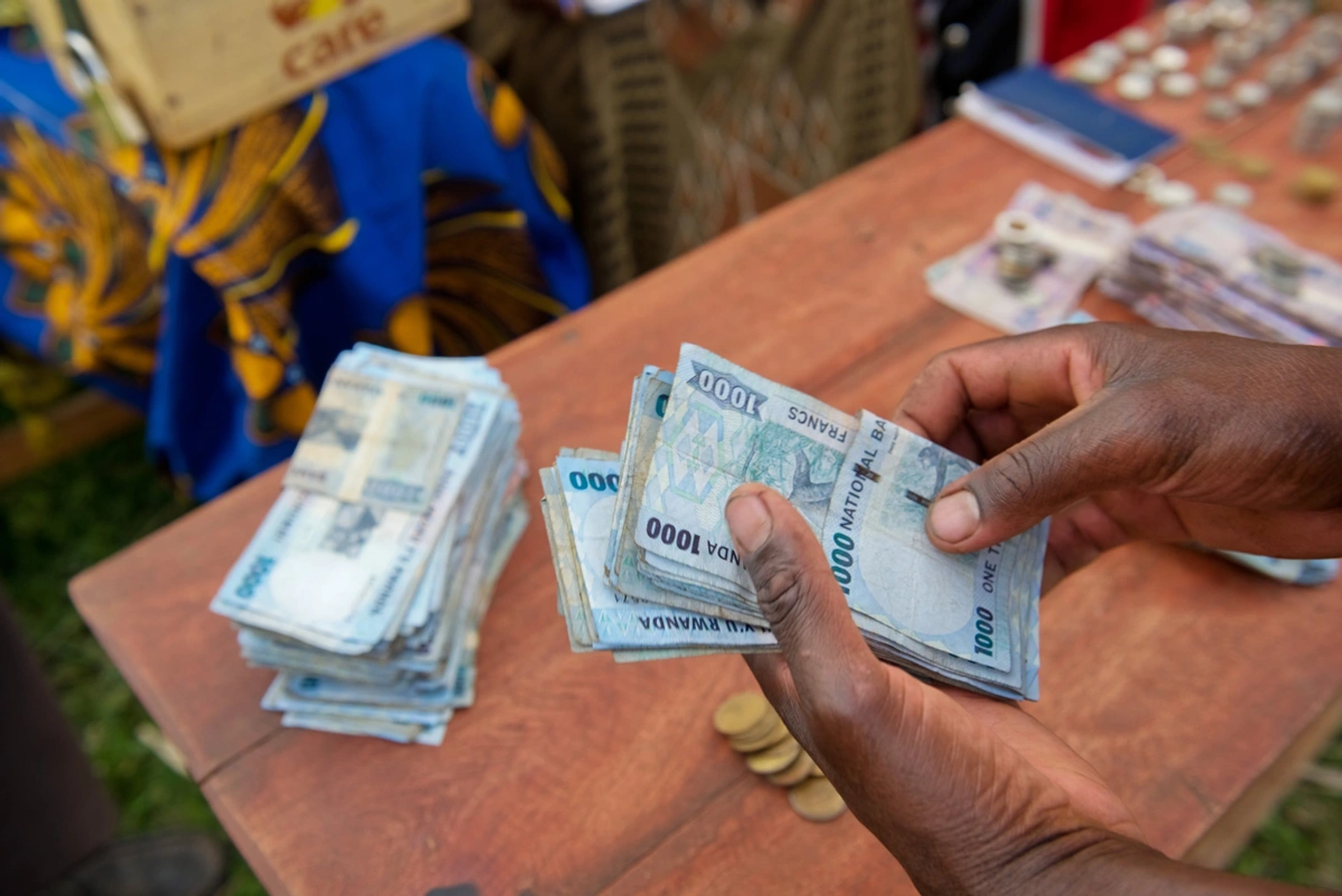
Mobile money forms the backbone of Rwanda’s digital economy. MTN Mobile Money and Airtel Money maintain their positions as market leaders, with a combined market share of over 70%. Mobile money accounts have reached 9.8 million users as of March 2025, representing 76% of the adult population. These two operators connect millions of Rwandans, especially in rural areas, to basic payment and transfer services.
On the banking side, the sector has remained healthy and profitable. As of the first half of 2025, the banking sector registered loan growth of 15.4% while remaining highly profitable, with regulatory capital well above minimum requirements. The microfinance sector has also expanded rapidly, with loan growth moderating slightly to 20.8% in the first half of 2025. Bank of Kigali leads the charge on digital banking, while Equity Bank Rwanda (which acquired Cogebanque in 2023) and BPR Bank Rwanda are expanding their digital product offerings.
The fintech sector is still young but growing fast. As of June 2025, Rwanda’s fintech ecosystem already includes more than 20 payment aggregators, 10 remittance providers, and seven e-money issuers. Since 2014, Rwanda has grown from just three registered fintech firms to over 75 active players, now serving more than three million users. Most fintechs cluster around payments, clearing and settlement, with smaller but growing segments in lending, insurance, savings, and capital raising.
A major development in 2025 was the launch of RNDPS 2.0, branded to consumers as eKash. Rwanda integrated Mojaloop into RNDPS 2.0 to advance its digital payments and public infrastructure strategy. The system was launched on February 27, 2025 at the Inclusive Fintech Forum. eKash enables person-to-person and person-to-business transactions, with payments typically finalized in less than 15 seconds, regardless of the financial institution or operator used. Merchants can accept payments via a single QR code or other digital channels, without needing multiple terminals or apps for each bank or wallet. This kind of interoperability infrastructure is a critical building block for open finance. A key priority of this upgrade has been integrating SACCOs and MFIs into the ecosystem, expanding access to digital financial services.
Rwanda also launched a Center for Digital Public Infrastructure (DPI) in 2025. This hub is dedicated to fostering open and scalable digital systems that promote financial inclusion and economic growth, and will support innovation, research, and policy development while positioning Rwanda as a leader in DPI adoption across Africa.
Rwanda does not yet have a formal open banking or open finance regulation in force. But it is one of the few African countries with a clearly documented plan to get there.
BNR’s 2024 feasibility study found that Rwanda’s financial ecosystem, powered by mobile operators, microfinance institutions, and banks, is ripe for open finance adoption. While smartphone penetration and data-sharing culture still need strengthening, consumer willingness and regulatory support are strong.
Following the feasibility study, BNR published a formal Position Paper on Open Finance, laying out a phased, multi-year roadmap spanning 2024 to 2030:
Phase 1 (2024 to 2026) focuses on capacity building, voluntary data sharing, and the development of foundational guidelines around API standards, data sharing, consent mechanisms, and liability frameworks. This is the phase Rwanda is currently in.
Phase 2 (2026 to 2028) could see a shift to a mandatory regime for Tier 1 banks and mobile money operators, or the continuation of a voluntary regime with active government oversight. This decision point will likely be shaped by how much traction Phase 1 gains.
Phase 3 (2028 to 2029) envisions expansion to all regulated financial institutions and third-party providers, with data controller and processor certification requirements.
Phase 4 (2029 to 2030) aims to introduce a TPP licensing framework and potentially a central API platform for nationwide data sharing.
Governance of this process will sit with BNR, co-chaired by the Capital Markets Authority and the Ministry of ICT and Innovation. An Open Finance Forum is planned, structured with a Steering Committee at the CEO level and a Technical Committee at the Head of IT level, ensuring both strategic and operational input.
The data approach is deliberately incremental. It starts with low-sensitivity data such as product information and gradually expands to sensitive consumer account data, enabling more advanced use cases like alternative credit scoring, account aggregation, and personalized financial products.
Rwanda’s broader regulatory environment is unusually well-organized for open finance adoption.
Rwanda’s first data protection legislation, Law No. 058/2021 Relating to the Protection of Personal Data and Privacy, was enacted and entered into force on 15 October 2021. The law is part of Rwanda’s broader push to achieve a knowledge-based economy. The supervisory authority is the National Cybersecurity Authority (NCSA). The law includes consent-based data processing requirements, extraterritorial scope, and provisions for cross-border data transfers, all of which are essential for an open finance regime.
The BNR’s regulatory sandbox provides a controlled environment where fintech companies can test innovative products and services under the supervision of regulators. Rwanda’s sandbox stands out for its clear eligibility criteria, streamlined application process, and strong focus on consumer protection. Seventeen companies have already been admitted, including IT Consortium Rwanda’s platform, Chango, which digitizes traditional savings groups. By early 2025, the sandbox was already accepting applications for its 8th cohort.
At a national strategy level, Rwanda has aligned multiple policy frameworks to support fintech growth and financial deepening. The Financial Sector Development Strategy (FSDS) 2025 to 2029 is a nationally developed framework that aligns the financial sector with Rwanda’s broader economic growth objectives, including establishing the country as a regional financial hub through the Kigali International Financial Centre. Its overarching goal is to transform the financial sector into a dynamic engine that efficiently mobilizes and channels capital towards Rwanda’s development needs.
Rwanda has also launched a forward-looking National FinTech Strategy, with bold targets including attracting $200 million in fintech-related investment and achieving 80% adoption of fintech solutions nationwide by 2029. The initiative is a cornerstone of Rwanda’s Vision 2050. The strategy also targets 300 fintech companies and 7,500 jobs created within Rwanda’s fintech ecosystem.
The National Bank of Rwanda (BNR) is the anchor of the entire open finance effort. Rwanda’s primary competitive edge is regulatory excellence. Unlike larger African markets plagued by regulatory fragmentation, Rwanda provides cohesive oversight primarily through the National Bank of Rwanda. BNR also operates the regulatory sandbox and chairs the planned Open Finance Forum.
RSwitch, Rwanda’s national payments processor, has been instrumental in building interoperability infrastructure. RSwitch led the RNDPS 2.0 implementation with support from WiredIn, a Rwandan systems integrator. Its role in managing the national payment switch makes it a natural infrastructure partner for any future open finance API platform.
The Kigali International Financial Centre (KIFC) adds a strategic layer. In just five years, Rwanda has attracted more than $1 billion in targeted investment commitments through the KIFC. The Global Financial Centres Index ranks Kigali as the third-best International Financial Centre in Africa. KIFC’s mandate to position Kigali as Africa’s fintech home creates a pull effect for international firms and investors, which strengthens the broader ecosystem.
Access to Finance Rwanda (AFR) plays a pivotal role in policy advocacy and financial system strengthening. AFR has been instrumental in building critical market infrastructure such as the National Digital Payments System to improve efficiency, transparency and responsiveness across the financial system, including government transfers and welfare payments.
Banks like Bank of Kigali, mobile operators MTN and Airtel, and the growing base of fintech startups round out the ecosystem. Their willingness to participate in data sharing, once standards and incentives are in place, will determine how quickly open finance moves from paper to practice.
Open finance could unlock several important outcomes for Rwanda.
The country’s 96% financial inclusion rate tells a story of access, but depth of financial services still has room to grow. Open finance could enable more tailored lending products for MSMEs and smallholder farmers, who currently face a financing gap that has been described as the most significant business constraint in the country. Alternative credit scoring built on transaction data from mobile money, savings groups, and e-commerce platforms could expand creditworthiness beyond the limits of formal credit bureaus.
Rwanda’s cashless economy goals also stand to benefit. With eKash enabling interoperable merchant payments and the RNDPS 2.0 infrastructure in place, open finance could layer account aggregation, personal financial management, and automated savings tools on top of an already connected payment system.
Cross-border financial services represent another frontier. A Memorandum of Understanding signed between the Bank of Ghana and the NBR on February 25, 2025, introduces a license passporting framework and interoperability, enabling regulated fintechs to expand mobile money and remittance services beyond Rwanda’s borders. Open finance standards could make Rwanda a testing ground for solutions designed at East African or continental scale.
Over 650,000 smallholder farmers are now benefiting from the National Agricultural Insurance Scheme, while Ejo Heza, the long-term savings product, now has over 3.5 million clients with capitalization exceeding $49.5 million. Open finance data sharing could strengthen these programs by allowing more targeted, data-driven delivery of insurance and pension products.
Rwanda’s open finance journey is not without friction.
The most immediate challenge is that the country is still in Phase 1, the capacity-building and voluntary data-sharing stage. Without a mandatory framework in place, financial institutions are under no obligation to open their data to third parties, and most have little incentive to do so voluntarily.
Technical readiness remains uneven. While RSwitch and the major banks have invested in digital infrastructure, many smaller institutions, particularly SACCOs and microfinance providers, lack the secure API infrastructure needed for standardized data sharing. Building that capacity across a fragmented financial sector takes time and investment.
Smartphone penetration, while improving, is still a constraint. Low 3G and 4G subscription rates inhibit further development of innovative digital payments, and many innovative financial services require smartphones that penetration levels have not yet fully supported. Open finance use cases like account aggregation and personal financial management tools rely heavily on smartphone access.
Funding prospects for fintech startups in Rwanda are limited. In the absence of local fintech-focused investors, startups heavily rely on foreign investors who may lack contextual understanding of the local market. Data localization measures impose high data storage and hosting costs on fintech startups, and annual USSD licensing and telco integration fees raise operational costs and limit their ability to pilot and test products.
Consumer awareness of open finance concepts is also low. While willingness to share data is reportedly high among survey respondents, most Rwandans are not yet familiar with what open finance means in practice or how it could benefit them.
Rwanda’s approach to open finance is deliberate, structured, and grounded in a broader digital transformation agenda that extends well beyond financial services. The country has set a six-year implementation horizon, aiming for full ecosystem maturity by 2030.
What sets Rwanda apart from many African peers is not the pace, but the coherence of its approach. The open finance roadmap does not exist in isolation. It sits within a web of reinforcing strategies: the FinTech Strategy 2024 to 2029, the Financial Sector Development Strategy 2025 to 2029, Vision 2050, the DPI agenda, and the KIFC positioning. Each piece strengthens the others.
The real test comes in Phase 2 (2026 to 2028), when the BNR will need to decide whether to shift from voluntary to mandatory data sharing. That decision, and the industry’s response to it, will determine whether Rwanda’s open finance plan moves from well-documented intention to real-world transformation. If BNR, fintechs, banks, mobile operators, and development partners continue the collaborative posture that has defined Rwanda’s financial sector reforms, the country is well positioned to become one of Africa’s leading open finance markets.
Open Banking Nigeria (Open Technology Foundation) is a non-profit backed by a group of industry experts across banking, fintech, risk management, and more to drive and launch the open banking standard in Nigeria.